Tag: Fire Safety

Making Lucy Crease Herself With Laughter!

Today was very busy. I finally got round to clearing the top of the lockers. Unfortunately there was loads of cardboard and other rubbish up there, as well as the costumes for fundraising and the Resussi Annie Doll. The costumes got boxed and put on top of the lockers, along with the Resussi Annie Doll. It looks alot better. It took ages to sort out and it meant taking loads of cardboard this down to the bins. This took several trips.

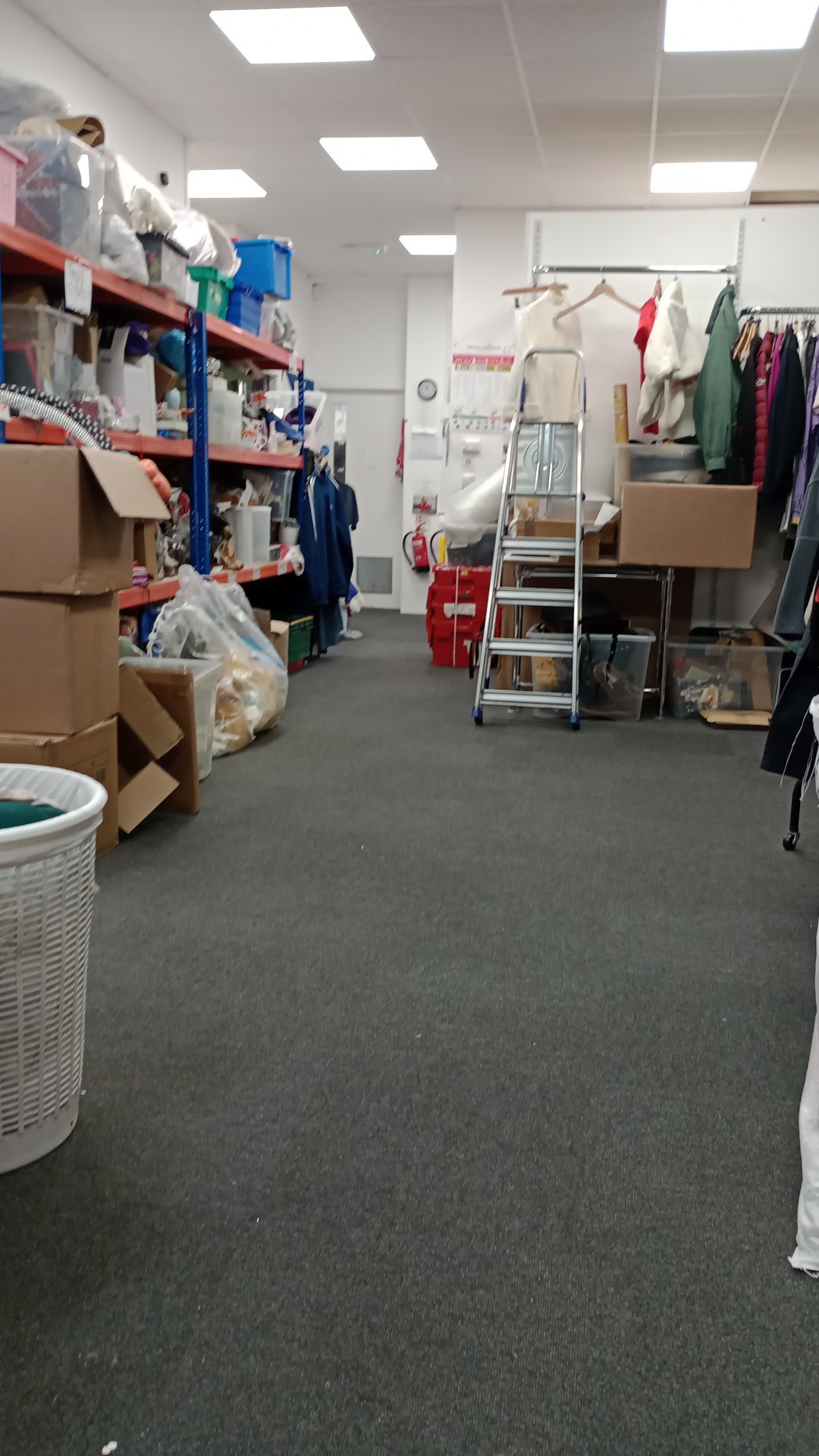
We also managed to tidy the Work Room. This took quite a bit of work as well and meant taking loads down to the bins. Our bin shed is now full to the brim. Thankfully tomorrow, I will be putting the bins out, so we will get getting rid of loads and loads of rubbish. The Work Room won’t stay tidy for long, as we are always getting donations and I am sure that we will be getting a delivery of more stuff in the coming days!

Tidied Stock Room

I did manage to do some work on the shop floor, as well as my normal cleaning duties and sorting out the locker room. I served customers and tidied up the shop floor at the same time. We also did all the Health and Safety Checks, which included the Fire Alarm Test.

Then, I managed to make Lucy crease herself with laughter. While I was cleaning the toilets, (at the end of the day) Dirty Blondes kept coming on our radio channel. The 1st message was about an order for table 23. Then when I was downstairs, I heard them call: “Hello hello hello?”

I could not help myself and had to sing Adele down the radio. “Hello, it’s me, I’ve ordered a Pepperoni Pizza and I’m sat at table 23!” This made Lucy almost wet herself with laughter! For me this was very quick whited and extremely hilarious. I wonder what Dirty Blondes thought or if they realized it was us having some fun with them? 😂😂😂😂

It just proves, we have far too much fun at the British Heart Foundation! 😂😂😂😂😂

A Guide to Fire Drills

In Commercial Premises, the law prescribes that we must carry our a full evacuation of the building regularly. Regulatory Reform (Fire Safety) Order 2005) These evacuations should happen at least ONCE every SIX MONTHS and should encompass the full evacuation of the building, to an external assembly point.  The reason for these drills, is to make sure everyone knows what to do, if the fire alarm does sound.

So, lets talk about the best practices in a fire drill.

Never Announce the Drill

Fire Drills should be kept a secret. Only those that need to know, should know when the alarm will sound. This is done to make sure that people do not ignore the alarm when it sounds. I know about the fire drill at work next week, because of my position. This is ‘need to know info.’

Don’t Make it Obvious

You don’t want to make the evacuation obvious. That is why it is important to activate the alarm from a point where there are lots of people. Activate the alarm the normal way, using a ‘break glass unit,’ either by activating the same way as you would when there is a fire, or using the test key. (Which goes into the bottom or side of the break glass unit)

Make Sure You Review Your PEEP Documents

If  you have disabled people, make sure that you have reviewed your Personal Evacuation Plans. (PEEPS) This will help you to  plan the evacuation and allow you to ensure disabled people are evacuated safely.

Let Your ARC Know, If You Have A Monitored System)

If you have a monitored system, it is important to let your Alarm Monitoring Centre know you are carrying out an evacuation. This will prevent them from calling out the Fire Service. If you do not have a monitored system – you should ring the non emergency number for your local Fire Authority and let their control room know. You can normally find this number on the website for your local Fire Authority. It may also be a good idea to let neighbouring properties know, so they do not call 999.

Make Sure Your Fire Marshals Help To Clear The Building

Your Fire Marshalls should make sure that the building is fully evacuated. Those Evacuating, should stop what they are doing and be encouraged to leave their personal possessions where they are.  Evacuation should then be carried out via the nearest exit.

Proceed to the Assembly Point

Make sure everyone goes to the Assembly Point and make sure they stay there until the evacuation is stood down. It is a good idea to keep someone at a safe distance from the building, to make sure other people do not enter the building, until the evacuation is stood down. The Assembly Point, should be at a minimum of 50 feet away from the building.

Standing Down

The evacuation should be stood down, verbally. “Thank you, it is now safe to go back inside the building” is a example you can use. If like us, you use 2 way radios, make sure that you clearly state something along the lines of: “Fire Alarm Stand Down, I repeat… Fire Alarm Stand Down.” This lets everyone know that the incident is stood down and that it is safe to go back into the building.

Log in the Fire Alarm Log Book

Make sure that you log the evacuation in your Fire Alarm Log Book and let the ARC \ local Fire Authority know, the drill is complete.

What is the best achievable time to evacuate the building?

Ideally, the building should be fully evacuated within 2 minutes

Fire Safety in the Workplace

Fire Safety in the workplace is everyone’s responsibility. In this guide, we will look at how you  can keep yourself and others at work safe.

Fire Risk Assessment

Your employer should have carried out a Fire Risk Assessment. A fire risk assessment is crucial to the fire safety process, you unable to correct and control what you’re not aware of. These risk assessments are performed by the qualified person of responsibility to find potential fire hazards and risks in a building or area.

A fire risk assessment includes identifying what could potentially cause a fire and control measures to reduce the risk of a fire occurring. This may include installing sprinklers or smoke detectors and making changes to wiring, appliances, and storage areas. They are conducted at any time of the year and should be done regularly as part of any routine inspections.

The government recommends that risk assessments should be carried out by suitably competent fire professionals. This Fire Risk Assessor is competent at the prescribed level and can carry out a fire risk assessment of a premises. Many assessors work as specialists in a very particular sector, such as hospitals, construction sites, manufacturing, etc., but they also have a very broad understanding of different industries as well.

Identifying Risks and Hazards, during your Fire Risk Assessment

The number and type of hazards will vary from place to place and sector to sector. However, there are some common hazards that you can identify, and mitigate against.
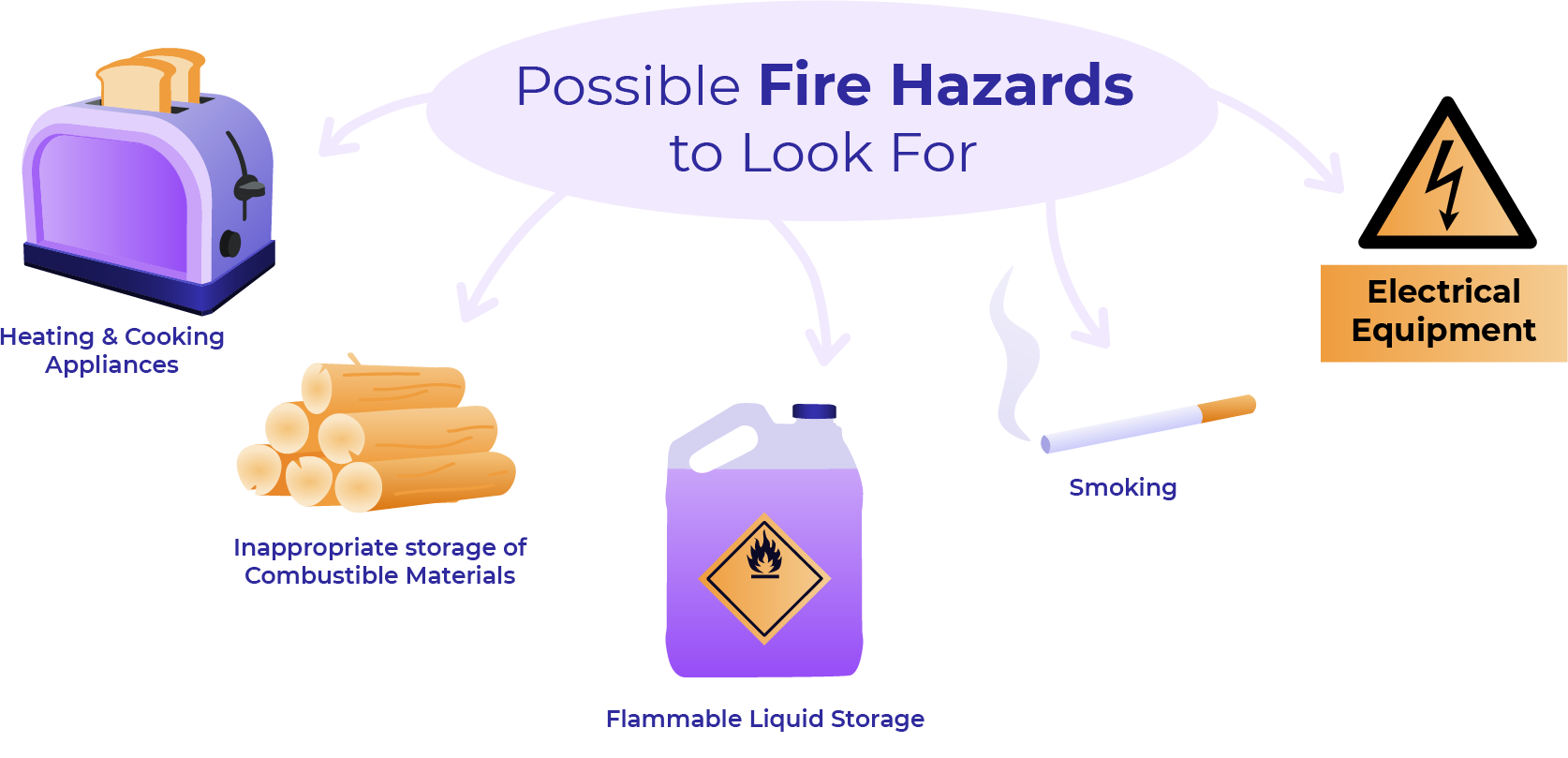
Diagram illustrating various potential fire hazards.

  • Electrical Equipment: Overloaded circuits, lack of maintenance can cause equipment to become faulty. Make sure all electrical work is carried out by qualified electricians and ensure that all portable appliance testing (PAT) is up to date.
  • Heating / Cooking Appliances: For cooking appliances, keep things clean. A build-up of materials can catch fire. Take care if wearing loose clothing, and NEVER leave cooking unattended. For heaters, keep them away from clothes, curtains and furniture and never use them for drying clothes.
  • Inappropriate Storage of Combustible Materials: Empty bins regularly and keep evacuation routes clear of any flammable materials.
  • Flammable Liquid Storage: Glues and other solvents are another source of fires as they are likely to combust if not stored correctly.
  • Smoking: Keep designated smoking areas away from the building and provide proper ash bins for disposal near these areas.

Fire Alarm Test

A manual call point should get activated to test the operating effectiveness of the Fire Alarm System to safeguard the persons on work premises. They should be checked weekly once and recorded in your site logbook. Simply activating the alarm at the fire alarm panel, is not acceptable.

Emergency Lighting Test

Every Emergency light, should be tested weekly. This should be logged on the appropriate form. Emergency Lights that do not work, should be fixed, as soon as possible.

Fire Extinguishers

all Fire Extinguishers should be located in a reachable spot. As soon as an employee can identify them, the employees must know which type of extinguisher they are using. Fire Extinguishers should be maintained by a repeatable company, every 6 months.

Keep your Fire Exit Clear

Fire Exits must be kept clear at all times. This means making sure that exits are kept clear from obstructions and exit doors should be well maintained. Panic Bars \ Pads should be easily operable and where Emergency Egress Buttons are  present, these need to be tested every week, to make sure they release the doors.

Fire Drills

Fire Drills, should be carried out, either yearly or half yearly, depending on your Fire Risk Assessment. You should aim to evacuate in less than 2 minutes, during a fire drill.

PEEP (Personal Emergency Evacuation Plans)

If your workplace has disabled people, PEEPS must be in place. This should include what help a disabled person requires when evacuation and any reasonable adjustments are needed. This may include escorting someone out of building, special equipment, (such as a EVAC Chair) or providing Refuge Areas.

That is the basics of Fire Safety… More information can be found on the HSE Website.